
A founder has closed a seed round and needs the news out. A funding announcement press release should lead with the company name, amount raised and purpose, then name the lead investor and use of funds in the first paragraph, and stay short.
The right pattern depends on the round stage, and each stage below has its own release shape. For the wider mechanics of structure, distribution and follow-up, start with the tech press release format guide, then use this page to adapt it to money news.
Choose a pattern by round stage
A funding round is not one story at every size. An agency guide from ACI Newswire points to a critical difference between a seed narrative and a Series C narrative, and describes a strong announcement as more than a capital receipt. Start by deciding which story your round tells.
| Stage | Typical round size | Planning use |
|---|---|---|
| Seed | $1-5M | Founder-led story. Lead with the problem, the purpose of the money and the lead investor. |
| Series A | $5-20M | Name the round type next to the amount and lead firm in the opening paragraph. |
| Series B | $20-60M | Keep amount, round type and lead investor up front. Adjust the purpose line to the company’s current stage. |
| Series C and later | $60M+ | Expect a different narrative from seed. Build it around what the larger round will fund. |
The round-size ranges and the note that seed-stage founders make most decisions come from the LaunchLeads funding-events guide.
Seed round pattern
A seed funding press release suits a company whose story is still the founder’s story. Because founders make most decisions at this stage, the founder quote carries the narrative and the lead investor quote supplies outside confidence.
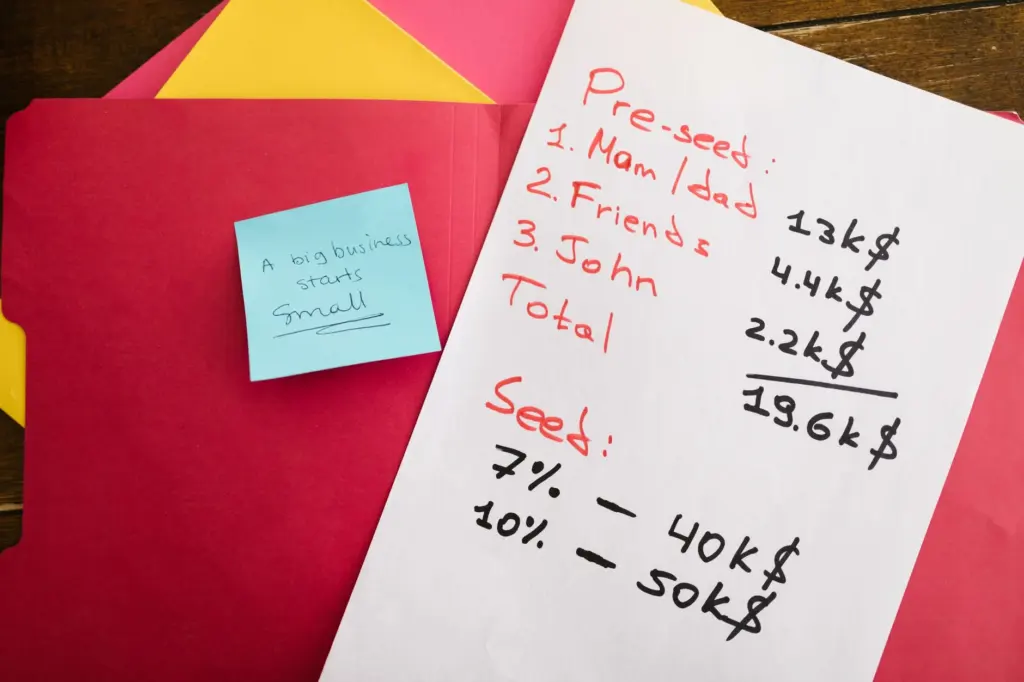
Weak seed announcements state only the raise. Words and Pixels contrasts a bare line such as “We raised £3M in our seed round” with a stronger version that names the problem, the purpose and the lead investor, because investors and journalists care about more than how much you raised.
A workable seed funding press release template, with placeholders for your own facts:
- Headline: [Company] raises [amount] seed round led by [lead investor] to [purpose].
- Opening paragraph: [Company], which [one-line description], today announced a [amount] seed round led by [lead investor]. The money will fund [use of proceeds].
- Problem paragraph: Who has the problem, why it persists and how the product addresses it.
- Founder quote: The long-term goal the round makes possible.
- Investor quote: Why the lead investor backed this team and market.
That skeleton also works as a startup raises funding press release example: swap in your facts, then check that every placeholder became a concrete statement rather than a slogan.
Series A and later-round patterns
From Series A onward, the opening paragraph should say what kind of round it was. ListofVC advises repeating the funding amount and the kind of funding, such as Series A, in the intro, alongside the lead firm. A reader who skims only that paragraph then knows the size, the stage and who led.
As the round grows, shift the weight of the story. A seed release can lean on a promising problem and a founder’s ambition. A later-stage release is better served by what the larger round will fund, since the narrative differs from the seed version. If the company has just shipped something alongside the raise, keep that detail short and link readers on to how to write a product launch press release for the separate product announcement rather than crowding the funding news.
Headline, first paragraph and disclosure
The headline carries the company name, the amount raised and the purpose of the funding, according to Words and Pixels. ListofVC adds that the startup name should come first, followed by the amount, with active verbs.
What belongs in the first paragraph
The first paragraph covers three essentials: the amount raised, the lead investors and what the funding will be used for. Funding releases typically disclose the announcement date, the funding amount, the investor names and the intended use of funds, as LaunchLeads describes. Treat those four items as the baseline disclosure and add the round type from the earlier section.
What to leave out
- A number with no context. Words and Pixels warns that without context the funding amount is just a number, so skip a release that is all about the figure.
- Vague purpose. A line such as “to fuel growth” does not tell a reporter what changes. Replace it with the product, market or hiring goal the money pays for.
- Anything you cannot confirm with investors. Check names, round type and amounts with each party before publication.
Gather these facts in one place before drafting, so the headline, the opening paragraph and the quotes all use identical numbers and names.
Funding press release quotes
Founder and lead-investor quotes are the lines reporters tend to reuse. ListofVC notes that these soundbites will likely be what reporters will use, so each one should work without the surrounding paragraphs.
Founder quote formula
Words and Pixels recommends a CEO quote on long-term goals. A formula that fits: name the problem, say what the money lets the company do, then state the larger aim. For example: “[Problem] has been hard for [customer] to solve. This funding lets us [use of proceeds], so that [long-term goal].” Keep the quote about the future rather than repeating the amount already stated in the first paragraph.
Investor quote formula
The investor quote should be a strong endorsement that adds credibility and signals confidence, per Words and Pixels. Use: “We backed [company] because [specific reason: team, market or traction]. We expect [what the investor believes will happen].” Avoid praise that could be pasted into any release, and give the investor a reason that only fits this company.
Use of proceeds line
Use of proceeds is the sentence that turns a raise into a plan. Press releases typically announce the funding amount together with the intended use of funds, as LaunchLeads notes, and the clearer that line is, the more a reporter has to write about.
A crowdfunding release shows how specific this can get. Instant Press suggests stating the target and breaking it down into tooling, certification, first production run and contingency. Venture-backed companies do not need that exact list, but the habit carries over: name two or three real spending areas rather than one catch-all phrase.
Write this line last. Once the headline, the quotes and the lead investor are fixed, the use-of-funds sentence can be matched to them without drifting.
Embargo and timing
Decide who hears first before anything is published. Employees, partners and existing investors should hear the news from you first, so none of them learns about the round from a headline.
Then choose between a wide release and an exclusive. The same guidance suggests offering an exclusive or embargoed story to high-value publications. An embargo suits a round big enough to interest a specific outlet and a team willing to give that outlet time to write. If you want everyone to publish at once, skip the exclusive and release to all outlets together.
When a lead investor is also becoming a commercial partner, announce that relationship separately and use a partnership press release template so the funding story stays focused on the money and its purpose.
Decision checklist before you send
- Confirm the round type and decide which stage pattern fits your story.
- Write a headline with the company name, the amount and the purpose.
- Put the amount, the lead investor and the use of funds in the first paragraph.
- Add one founder quote about the long-term goal and one investor quote about confidence.
- Cut any line that is only about the number.
- Tell employees, partners and existing investors first.
- Choose between an embargoed exclusive and a simultaneous release.
Frequently asked questions
How long should a funding press release be?
Words and Pixels advises keeping a funding press release under 500 words.
Should the release name every investor?
ListofVC recommends listing every VC involved and their respective funding levels. Confirm each name and figure with the investor first.
Which outlets suit funding news?
Tech and startup media such as TechCrunch, Business Insider and Wired are named by Words and Pixels as targets. LaunchLeads adds that TechCrunch, Crunchbase and LinkedIn amplify announcements.