Drafting a launch and unsure which tech press release examples to follow? Match your news type: software launch, funding round, new product or leadership change, then borrow the structure shown for it below.
Each example is annotated for what it leads with and where it can mislead you. Read them alongside the tech press release format guide, and use the tech press release template when you are ready to draft your own.
- Shipping software or a feature update: study the iOS 18 and product-launch examples, where benefits to the user carry the story.
- Announcing a funding round: study the Lemurian Labs example, which pairs the money with a problem.
- Introducing a physical or hybrid product: study the Porsche Taycan and Wilson Airless examples, which put a concrete product fact first.
- Announcing people or a merger: study the established-company examples, where scale and dates do the work.
What a strong tech release looks like
A strong tech press release gives the reader the full story in the first paragraph, in plain words, and then stops. According to ContentGrip’s release examples guide, the first paragraph should answer the 5Ws and how, and many straightforward announcements fit within 300 to 500 words. Brafton makes the same point about format: press releases are short, typically only one page.

Three habits separate the useful examples from the forgettable ones:
- A clear headline, not a clever one. ContentGrip’s illustrative headline, “Company X launches AI-powered CRM for Southeast Asian sales teams”, names the company, the product and the audience in one line. Our tech press release headline examples go deeper on that pattern.
- Simple language. Real News PR advises using simple language and avoiding jargon that may confuse the reader, which matters most when the product is technical.
- A news angle chosen before writing. The same source says to identify the unique angle or hook that makes the story newsworthy. If you cannot state it in a sentence, the release is not ready.
The effort is worth it. ContentGrip cites Cision’s 2026 State of the Media research, which found that 66% of journalists rely on PR-provided content. Your release is competing to be one of the items they use. The examples below show how different announcement types handle that competition.
Software launch examples
A software launch release works when it explains what changes for the user, not when it lists what was built. eReleases says a product launch release must focus on the news aspect of the product, and that what improvements mean to the customer is what makes an update newsworthy.
Apple’s iOS 18 release
As analysed by Upraise PR, the iOS 18 announcement framed the update around user benefits, describing the software as more personal, capable and intelligent. That is the right instinct: the headline promise is about the person using the product. The weakness to avoid copying is that those three adjectives are broad. A smaller company without Apple’s name recognition needs a specific capability or number next to the benefit, or the sentence reads as marketing.
Apple’s video subscription service
Brafton points to Apple’s announcement of its original video subscription service in March 2019 as a launch example. The date and the service name give journalists a clear hook. Use it as a model for stating exactly what is being launched, and treat it as a reminder that a launch release should name the offering in the opening lines, not bury it under company background.
Chipotle’s High Protein Menu, a non-tech structural model
eReleases highlights Chipotle’s first-ever High Protein Menu and a new High Protein Cup. The release states the protein range of the menu items, 15 to 81 grams, which gives reporters a checkable fact. It is not a tech announcement, so do not borrow its subject. Borrow the habit of putting a measurable specification beside the “first-ever” claim, which a software release can do with performance figures, supported platforms or pricing.
Startup funding examples
A startup release differs from an established company’s release mainly in what it has to prove. A funding release has to signal more than the capital raised, according to Upraise PR, and the Lemurian Labs announcement shows how. It was titled “Lemurian Labs Raises $28 Million Series A to Liberate AI from the Constraints of Hardware” and described the round as oversubscribed.
What the Lemurian Labs example gets right
The headline carries two jobs. The first half gives the verifiable news, the amount and the round. The second half states the problem the company is attacking. A reader who has never heard of the company still learns what it does, which is the main advantage of this structure for an unknown name.
Where a funding release can go wrong
The risk is leading with the money alone. Investors and amounts matter to financial reporters, but a technology journalist wants to know what the capital makes possible. If your release only celebrates the raise, add the product milestone or market problem it funds, as this example does in its headline.
Established company announcements
Established companies can lean on name recognition, so their releases tend to lead with scale, dates and named people. These examples are mostly from outside tech, but their structure transfers to executive hires, acquisitions and partnerships.
- Leadership change: Upraise PR cites Starbucks naming Brian Niccol as chairman and CEO. The announcement is the headline; there is nothing to decode.
- Interim appointment: eReleases includes a Frontier release naming an interim CEO effective December 15, 2025. The effective date is the detail that lets a newsroom file the story accurately.
- Merger: the same eReleases collection includes a merger release describing combined operations of 450+ locations, over 110 service centers and six distribution hubs. Quantifying the combined footprint turns an abstract deal into something a reader can picture.
The lesson for a tech company is to state the effective date or the scale in the opening paragraph. A startup does not have a Starbucks-sized name, so it must also say who it is, which is why the funding example above spends its headline on the problem as well as the raise.
New product examples
New product releases earn attention through one concrete product fact that a reader can repeat. Brafton’s product-release round-up offers two useful cases.
Porsche Taycan
The Taycan launch release quantified the development effort, citing six billion euros in investments. A figure like that tells a journalist the product is a serious commitment, not a minor variant. If you have a comparable number, such as development spend, user base or performance gain, place it where the product is introduced. Do not invent one: a missing figure is better than a vague claim.
Wilson Airless Gen1
Wilson’s Airless Gen1 basketball uses 3D-printed technology, and the release makes the benefit plain: it never needs to be inflated. This is a good template for a hardware or hybrid product because the technology and the user benefit appear together. The technology alone would read as engineering detail; the benefit alone would read as a claim.
Comparing the examples at a glance
The table groups the four product and funding examples by what each leads with, so you can choose the closest model for your announcement.
| Example | Announcement type | What it leads with | Planning use |
|---|---|---|---|
| iOS 18 | Software update | User benefit: more personal, capable and intelligent | Pair the benefit with a specific capability |
| Lemurian Labs | Startup funding | $28 million Series A plus the problem addressed | Put the problem in the headline, not just the amount |
| Porsche Taycan | New product | 6 billion euros in investments | Use a real investment or scale figure if you have one |
| Wilson Airless Gen1 | New product | 3D-printed design that needs no inflation | Show technology and user benefit together |
The examples and figures come from Upraise PR’s analysis and Brafton’s product release examples.
Finding real examples in newsrooms and on newswires
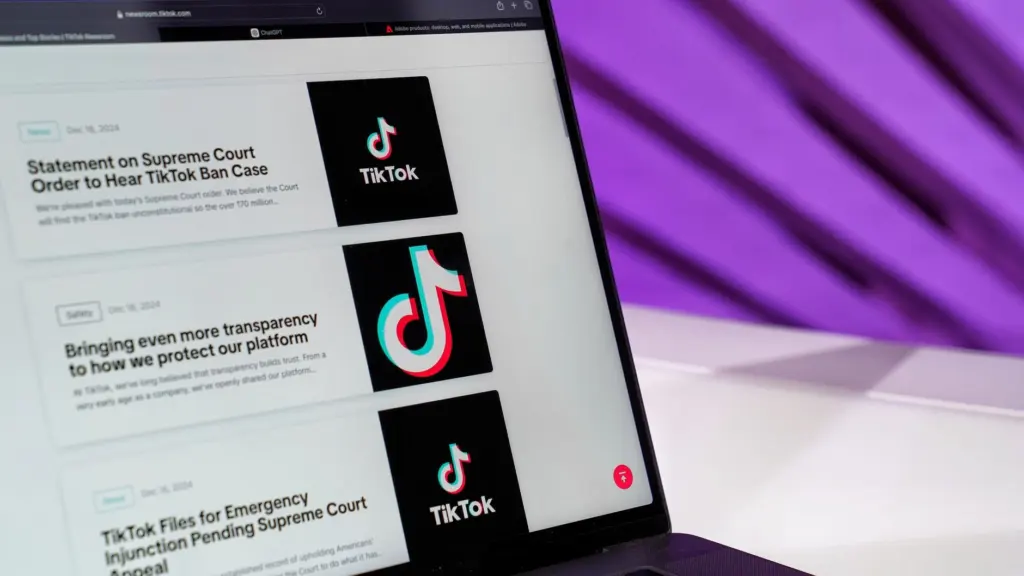
Your best long-term reference library is the newsroom section of tech company websites, where past announcements sit in dated order. Newswire archives work the same way for companies that distribute through a wire service. Browsing both shows how real companies handle headlines, quotes and boilerplate across many announcements, not just the one a blog post singled out.
When you read a release, check three things: whether the headline names the company, product and audience; whether the first paragraph answers the 5Ws; and whether the quote adds information the paragraph above did not. Trade press coverage of the same announcement is useful for seeing which detail reporters actually picked up.
What to copy without sounding generic
Copy the structure of an example, never its sentences. The structure is reusable because it serves the reader; the phrasing is what makes a release sound like everyone else’s. Upraise PR sums up the approach in event and launch releases: clarity first, promotion second.
- Start from your news angle. Write the hook in one sentence before drafting, as Real News PR advises, and check it against the announcement types above.
- Put the essential details up front. Upraise PR notes that an event release presents date, theme and hosts in its opening, making it easy for outlets to use. Do the same with your launch date, product name and audience.
- Write the quote to explain why the news matters. ContentGrip says to avoid marketing slogans and use quotes to explain why the news matters, not repeat the announcement.
- Add a customer voice if you have one. Real News PR suggests a statement from a satisfied customer sharing a positive experience, which adds credibility a company’s own executive cannot.
- Translate features into customer meaning. eReleases says what improvements mean to the customer is what makes an update newsworthy, so each feature in your draft should be followed by its consequence.
- Replace adjectives with checkable facts. The Chipotle protein range and the Taycan investment figure work because a reporter can verify them.
Frequently asked questions
How long should the boilerplate be?
ContentGrip says a boilerplate should describe the organization in two or three factual sentences. Brafton adds that it turns a one-off announcement into a lasting company asset, so keep it current and reuse it across releases.
Should I attach images to the release email?
Provide downloadable images and captions, clear links and a press kit instead of large email attachments, according to ContentGrip. This keeps the message light and lets journalists pull what they need.
Who should approve a release before it goes out?
eReleases says every press release should be reviewed by legal and management personnel before release. Do this review before you contact any journalist or newswire.